Poland’s ban on flavored heated tobacco products has officially taken effect. According to the new regulations, non-tobacco flavors such as fruit will be removed from retail outlets, and related products are required to be removed from shelves or cease sales. Simultaneously, regulators have set a transition period of no more than nine months for inventory clearance, allowing existing compliant inventory to be sold off within a limited timeframe. This arrangement marks a crucial step forward in Poland’s regulation of heated tobacco, leaving the industry with a clear but limited adjustment window.
From a policy perspective, the flavor restriction is not sudden. In recent years, many EU countries have continuously tightened regulations on new tobacco products, with flavor considered a key factor influencing product appeal. Poland’s decision to implement a flavor ban on heated tobacco aligns with the overall policy direction within the region, but at the implementation level, a relatively clear transition period has been maintained to minimize market disruption.
The most direct changes after the ban takes effect occur at the retail level. Fruit, sweet, and other flavored products will no longer be allowed in new sales channels. Stores need to review existing inventory and clear or remove it from the market within the specified period. For retailers who previously touted diverse flavors as a selling point, this means a rapid adjustment to their product mix and a shift in their operational focus.
The nine-month inventory clearance period is seen by many industry insiders as a “buffer period, but not a lenient one.” On the one hand, this timeframe provides retailers with realistic flexibility to manage existing stock, avoiding losses from immediate clearance; on the other hand, the clear deadline makes policy expectations clearer, reducing the possibility of repeated negotiations. Regulators hope to strike a balance between enforcement and market stability through this approach.
At the wholesale and distribution levels, the impact of the ban is equally evident. Once flavored products cannot enter retail channels, their market value will rapidly decline. Distributors will need to renegotiate inventory destinations with upstream suppliers; some products may be diverted to other markets or recycled under compliant conditions. This process places higher demands on supply chain coordination capabilities.
The manufacturing side faces even more structural adjustments. Heated tobacco products are typically produced centrally before entering different national and regional markets. The implementation of the flavor ban means that the product mix for the Polish market needs to be redesigned. From raw material selection to production scheduling, adjustments are required according to the new rules.
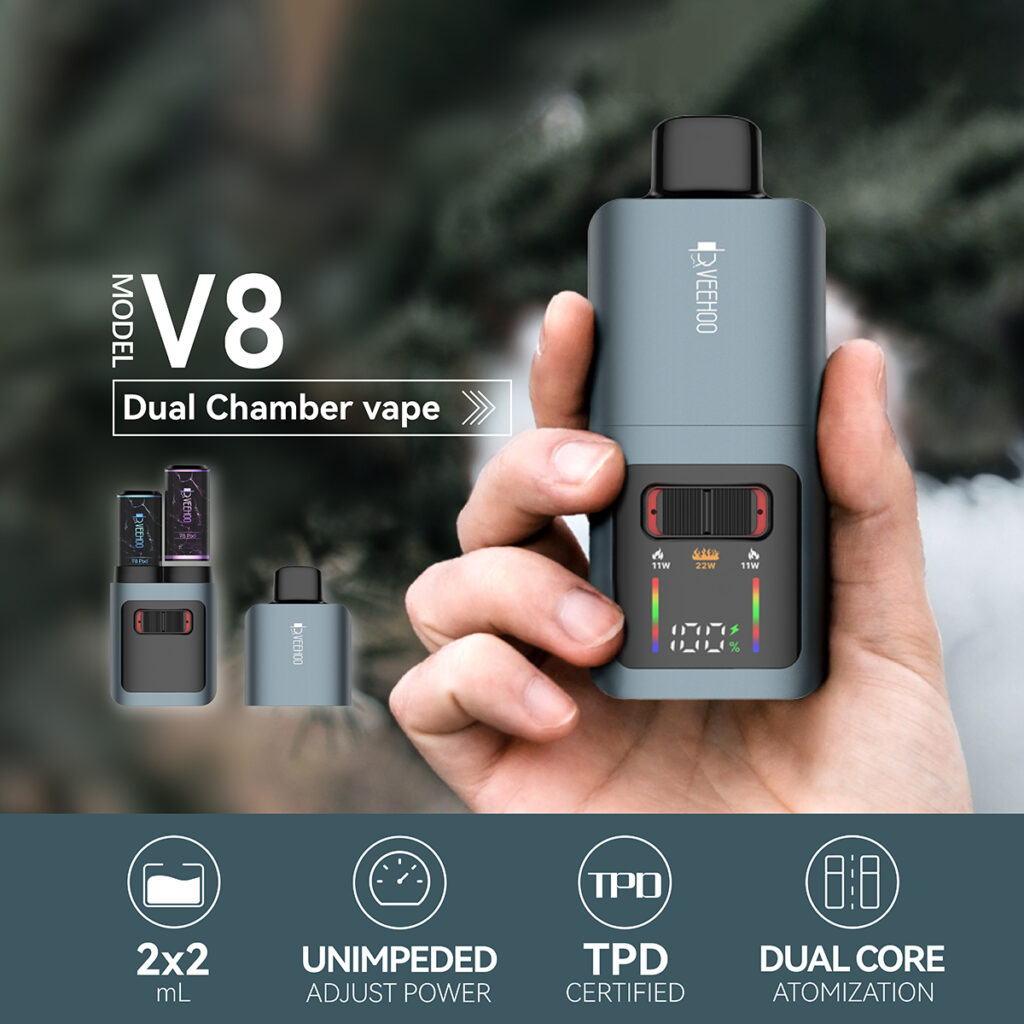
In this process, factories acting as OEMs or ODMs are particularly crucial. Take VEEHOO as an example; as a factory-type enterprise providing manufacturing services for heated tobacco and related products, it has long collaborated with various brands through OEM and ODM models. Under this model, the factory does not decide which market the product ultimately enters, but needs to flexibly adjust production plans according to the brand’s target market requirements.

When flavor policies change in a particular market, factories under the OEM model typically need to stop or reduce production of related flavored products according to customer instructions; while in ODM collaborations, factories often participate in product planning earlier and offer suggestions on market regulatory trends. The implementation of Poland’s flavor ban further highlights the importance of this kind of proactive judgment.
It is worth noting that the ban does not involve a complete rejection of heated tobacco products as a whole, but focuses on the specific dimension of flavor. This also means that compliance space still exists for products; however, the competitive logic will shift from “flavor diversification” to other dimensions. For the manufacturing end, this change is more reflected in product specifications and combinations than in production capacity itself.
From a regulatory design perspective, setting a clearance period is a more pragmatic approach. It acknowledges the reality of existing market inventory while avoiding prolonged delays by specifying a timeframe. This approach is not uncommon in EU member states’ tobacco regulations and helps reduce initial resistance to policy implementation.
However, the inventory clearance period does not signify a loosening of regulatory attitudes. Enforcement is expected to gradually intensify as the deadline approaches. Retailers who continue to sell banned flavored products after the deadline may face penalties. This prompts market participants to make adjustments early, rather than concentrating pressure until the final stage.
For consumers, the changes will gradually become apparent. As flavored products are removed from shelves, retail choices will become more limited. Whether this change will affect the overall consumption structure remains to be seen, but it is certain that the “flavor competition” phase in the market is ending.
At the international level, Poland’s approach is also seen as part of regional policy coordination. With increased communication within the EU regarding the regulation of new tobacco products, rules on flavors, packaging, and information disclosure are converging across countries. For multinational brands and factories, this convergence reduces long-term uncertainty but increases short-term adaptation costs.
Manufacturing plants typically adopt a multi-market strategy when dealing with such changes. By providing differentiated product solutions for different countries, they mitigate the impact of a single policy. Factories like VEEHOO, whose core businesses are OEM and ODM, have the advantage of adaptable production processes, enabling them to assist clients in achieving compliant transformation without involving marketing.
From a longer-term perspective, the flavor ban also prompts the industry to rethink the direction of product innovation. With flavor choices restricted, the importance of technological improvements, product stability, and compliant design will further increase. For manufacturers, this means more effort needs to be invested in R&D and quality control.
The timing of Poland’s ban also carries symbolic significance. It is not merely a policy adjustment in a single country, but a concentrated manifestation of regional regulatory logic. By clarifying rules, setting transition periods, and strictly enforcing them, regulators are attempting to send a clear signal to the market: the policy direction is set, and the window for adjustment is limited.
Overall, the implementation of Poland’s heated tobacco flavor ban provides a real-world example for the industry. It demonstrates how to maintain regulatory strength while allowing the market limited room for adaptation. For retailers, brands, and manufacturers, the key is not judging the policy itself, but how to adapt within the established rules.
As the nine-month inventory clearance period progresses, market changes will become more apparent. For manufacturers, understanding policies in advance and rationally planning production capacity are key to avoiding reactive responses. Factories like VEEHOO, which focus on OEM and ODM manufacturing, don’t play a role in influencing policy direction, but rather in providing stable and compliant production support to help partners smoothly navigate this adjustment phase.
Against the backdrop of evolving new tobacco regulations in Europe, Poland’s move may only be a temporary milestone. However, the signal it sends is clear: flavor is no longer a sustainable competitive tool; compliance and adaptability will be the foundation for the industry’s continued progress.
Tags: ceramic atomizer core, e-hookah (electronic water pipe), OEM ODM, veehoo vape