Among countries that have long implemented e-cigarette bans, Brazil has long been considered one of the most explicit representatives. However, a recent move from the judicial system is introducing new variables into this established path. Brazilian prosecutors recently filed a public interest lawsuit, advocating for a more stringent and enforceable regulatory system to gradually replace the current complete ban on e-cigarettes. This includes implementing a mandatory registration system for e-cigarette products and setting a nicotine content cap.
This move does not signify a sudden shift in Brazil’s stance, but rather a response to the current reality. Years after the ban, the market has not completely disappeared; instead, it continues to exist through informal channels. How to improve the actual effectiveness of regulation while maintaining public management objectives has become a real problem facing policymakers and judicial institutions.
From the prosecutors’ claims, the core logic is not “opening up the market,” but rather the belief that simple bans are insufficient to cover complex market behaviors. In the absence of legal channels and institutional constraints, product quality, distribution channels, and responsible parties become even more ambiguous, which deviates from the original intention of protecting the public interest.
Therefore, the prosecution’s proposed solution is to establish institutionalized regulatory tools for the controlled management of e-cigarettes. A mandatory registration system means that every product entering the market must clearly identify its origin, responsible party, and basic information; setting a nicotine cap attempts to provide a clear enforcement tool for regulation through technical parameters.
This approach is similar to the discussion path taken by some countries in recent years, moving from “ban” to “regulation,” but it is particularly noteworthy in the Brazilian context. After all, Brazil has long adopted a highly conservative policy stance on e-cigarettes, and the prosecution’s proactive push for institutional replacement sends a signal worth interpreting.
From a judicial perspective, public interest litigation itself does not directly amend the law, but rather, through judicial procedures, prompts relevant administrative departments to reassess the rationality and enforceability of existing policies. The prosecution’s goal is not to immediately terminate the ban, but to require the regulatory system to respond in a more realistic manner.
In the litigation documents, the prosecution emphasized the premise of “strict regulation.” This means that even if policies are adjusted in the future, it will not be a simple relaxation, but rather a constraint on market behavior through more refined rules. Registration systems, parameter restrictions, and accountability mechanisms—these tools themselves all bear a clear “tightening” characteristic.
From a social discussion perspective, this proposal has sparked differing opinions. Some public policy researchers believe that, given the long-standing ban and its high enforcement costs, introducing institutionalized regulation could actually improve transparency and governance efficiency. Others worry that any form of institutional substitution could be interpreted as a “loosening signal” and requires careful handling.
Regardless of stance, this public interest litigation has shifted the discussion on e-cigarette regulation from “whether to ban” to “how to effectively regulate.” This shift in focus is precisely its significance.
From international experience, there is no single answer to the path of e-cigarette regulation. Different countries have chosen different models based on their own legal systems, market structures, and public management capabilities. Some insist on a complete ban, some emphasize licensing and taxation, and some manage through ingredients and labeling. The proposal put forward by the Brazilian prosecutor is closer to the latter.
If this approach is ultimately adopted, it means that Brazil’s regulatory system will need to establish a completely new enforcement mechanism. This involves not only the allocation of administrative resources but also imposes higher regulatory requirements on the industry chain.
Against this backdrop, the role of the manufacturing end is equally noteworthy. Whether it’s a ban or strict regulation, it ultimately needs to be implemented on specific products and production entities. For the international market, while Brazil’s policy changes occur at the consumer end, their impact will gradually propagate along the supply chain.
In the global e-cigarette industry, OEM and ODM factories are crucial nodes connecting brands and the market. They typically do not directly participate in retail or promotion, but they are an indispensable part of the compliance system.
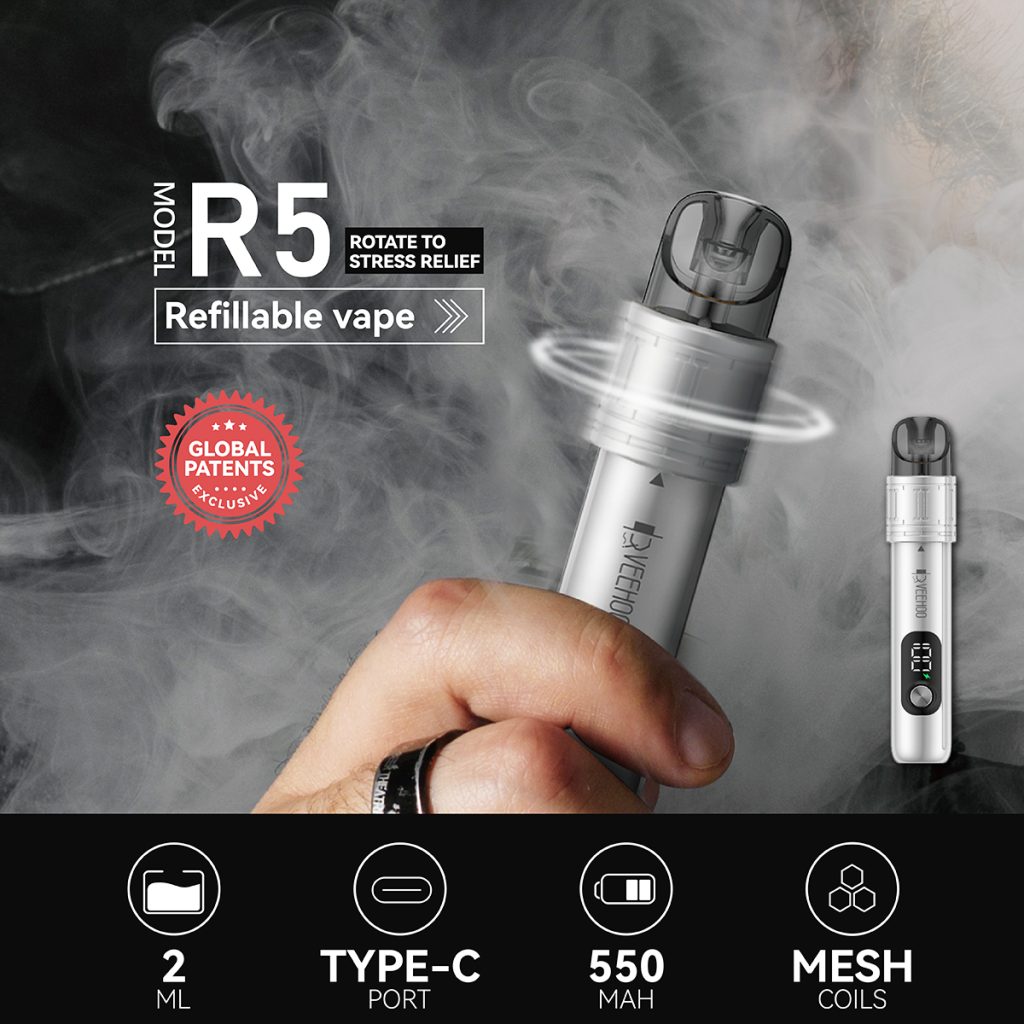
Taking VEEHOO as an example, as an e-cigarette manufacturer, it primarily collaborates with brands in different countries and regions through OEM and ODM models. In this model, the factory’s core task is not market decision-making, but rather completing production and technical implementation within the framework of established regulations and customer needs.
If a market shifts from a complete ban to mandatory registration and parameter regulation, the first thing brands need to do is assess whether their products are capable of entering the compliance system. This assessment often involves product specifications, information disclosure capabilities, and supply chain transparency.
In OEM collaborations, VEEHOO typically executes production according to the plans provided by the brand. When target markets begin to emphasize registration and parameter caps, brands may require factories to provide more complete production information, including batch management and technical parameter confirmation. These changes are not merely adjustments to advertising, but rather refinements to management processes.
Under the ODM model, factories participate earlier in the product design stage. At this point, understanding potential market regulatory trends directly impacts product design. For example, reserving different parameter configurations during the design phase, or preparing clearer technical documentation for potential future registration regulations, will become key areas of discussion.
It is important to emphasize that the prosecutor’s proposed nicotine cap falls under the category of regulatory tools, not medical efficacy claims. Its purpose is to provide a clear and enforceable standard to help regulatory authorities distinguish between compliant and non-compliant products. This parameter-based management is not uncommon in other product sectors.
From a regulatory enforcement perspective, parameters and registration systems are often more operational than general bans. Bans require significant enforcement resources to maintain, while regulatory oversight relies more on the binding force of the rules themselves. This is one of the key reasons the prosecutor proposed an “alternative path.”

Of course, regulatory transformation is not something that can be achieved overnight. Even if the court supports the prosecution’s claims, the administrative departments will still need to formulate detailed rules, establish systems, and train law enforcement personnel. This process itself requires time and coordination.
Therefore, a more reasonable interpretation at this stage is to view this public interest litigation as the starting point of policy discussion, rather than a conclusion. It opens a door to discussion, but what kind of institutional form lies behind that door remains to be seen.
From an industry perspective, the Brazilian prosecution’s actions reflect a broader trend: when a single tool is insufficient to address complex realities, policymakers begin to seek alternatives. This substitution does not signify a change in objectives, but rather an adjustment in methods.
For the e-cigarette industry, this change brings not simply benefits or harms, but uncertainty. Market rules may become more complex, but they may also become clearer. The key lies in whether the system is predictable and enforceable.
For manufacturing plants like VEEHOO, maintaining flexibility under the OEM/ODM model is particularly important in the face of divergent policy paths in different countries. Regardless of whether the market chooses “ban” or “regulation,” the core value of the manufacturing end always lies in acting according to the rules and adjusting to demand.
This public interest lawsuit in Brazil hasn’t changed any existing laws, but it has shifted the direction of the discussion. In the long run, this discussion itself is an important part of the evolution of regulation.
In the ever-evolving global landscape of e-cigarette regulation, Brazil may be standing at a new crossroads. Whether to continue with bans as the main approach or to try to improve governance efficiency through institutional alternatives remains to be seen. But what is certain is that this issue is no longer just an internal administrative discussion, but has been formally placed on the public and judicial agenda.
Tags: ceramic atomizer core, e-hookah (electronic water pipe), OEM ODM, veehoo vape.