Amidst the ongoing adjustments to tobacco and new tobacco product regulations across the United States, two recent tobacco-related bills in Florida have drawn significant attention from the industry. These bills do not adopt a radical “total ban,” but rather attempt to establish a more differentiated management framework for e-cigarettes and heated tobacco products by reclassifying their display, promotion, and tax system.
One bill focuses on e-cigarettes, explicitly stating that the retail display and promotion of e-cigarette products “not authorized by the U.S. Food and Drug Administration” will be further tightened. The other bill targets heated tobacco products, proposing to separate them from the existing cigarette tax system and place them under a separate tax management path. This combination of “tightening and loosening,” “tightening and adjusting,” reflects Florida’s practical considerations in tobacco regulation.
From the perspective of the bill’s background, this is not the first time Florida has adopted a tiered management approach in the tobacco sector. As a populous and tourism-rich state, Florida has long faced the reality of a complex variety of tobacco products and diverse sales channels. Against this backdrop, a single rule often fails to cover all product forms and is prone to disputes at the implementation level.
The core keyword in this restriction on the display and promotion of e-cigarettes is “FDA authorization.” The bill does not directly deny e-cigarettes as a product category, but rather focuses on whether they have passed federal-level compliance review. The legislators’ logic is that if a product has not yet obtained FDA authorization but is still prominently displayed or promoted in retail, it may mislead consumers.

Therefore, the bill proposes to reduce the “presence” of such products in the retail environment by restricting their display location, promotional methods, and visibility. This approach is not a formal ban, but in practice, it will significantly shrink the product’s market space.
In contrast, another bill concerning heated tobacco reflects a different policy direction. Heated tobacco has been included in the cigarette tax system for some time, but as differences in product form and consumption patterns become increasingly apparent, whether to continue applying the traditional cigarette tax rate has become a point of contention.
Florida’s proposal to separate heated tobacco from the cigarette tax system is not equivalent to tax reduction or exemption, but rather to establish a tax framework more suited to the product’s characteristics. Supporters argue that heated tobacco products differ significantly from traditional cigarettes in form, usage, and market positioning, and continuing with the existing tax system may hinder precise regulation.
From a policy perspective, these two bills reflect Florida’s differentiated treatment of different new tobacco products. For e-cigarettes, the emphasis is on federal authorization and retail constraints; for heated tobacco, the aim is to reposition its regulatory attributes through tax adjustments.
This differentiated approach is not uncommon in current state-level regulatory practices across the United States. Some states tend to focus on usage scenarios, some emphasize sales management, while Florida chooses to simultaneously address both “visibility” and “tax structure.”

For retailers, this means adjusting their business strategies. Even if e-cigarette products without FDA authorization can still be legally distributed, their display methods may be significantly restricted. With limited retail space, which products are displayed directly impacts sales.
Furthermore, adjustments to the heated tobacco tax system could alter the product’s position within the pricing structure. While the specific tax rates are yet to be finalized, once removed from the traditional cigarette tax system, the cost structure and retail pricing of e-cigarettes are likely to change.
From an industry perspective, such policy changes often don’t immediately trigger drastic market upheavals, but they will reshape the competitive landscape in the medium to long term. This is especially true at the supply chain level, where brands and manufacturers need to understand policy signals in advance and consider them in product planning.
In the global e-cigarette and new tobacco industry, OEM and ODM factories play a crucial role. They typically don’t directly face retail policies but are indirectly affected by changes in customer demand.
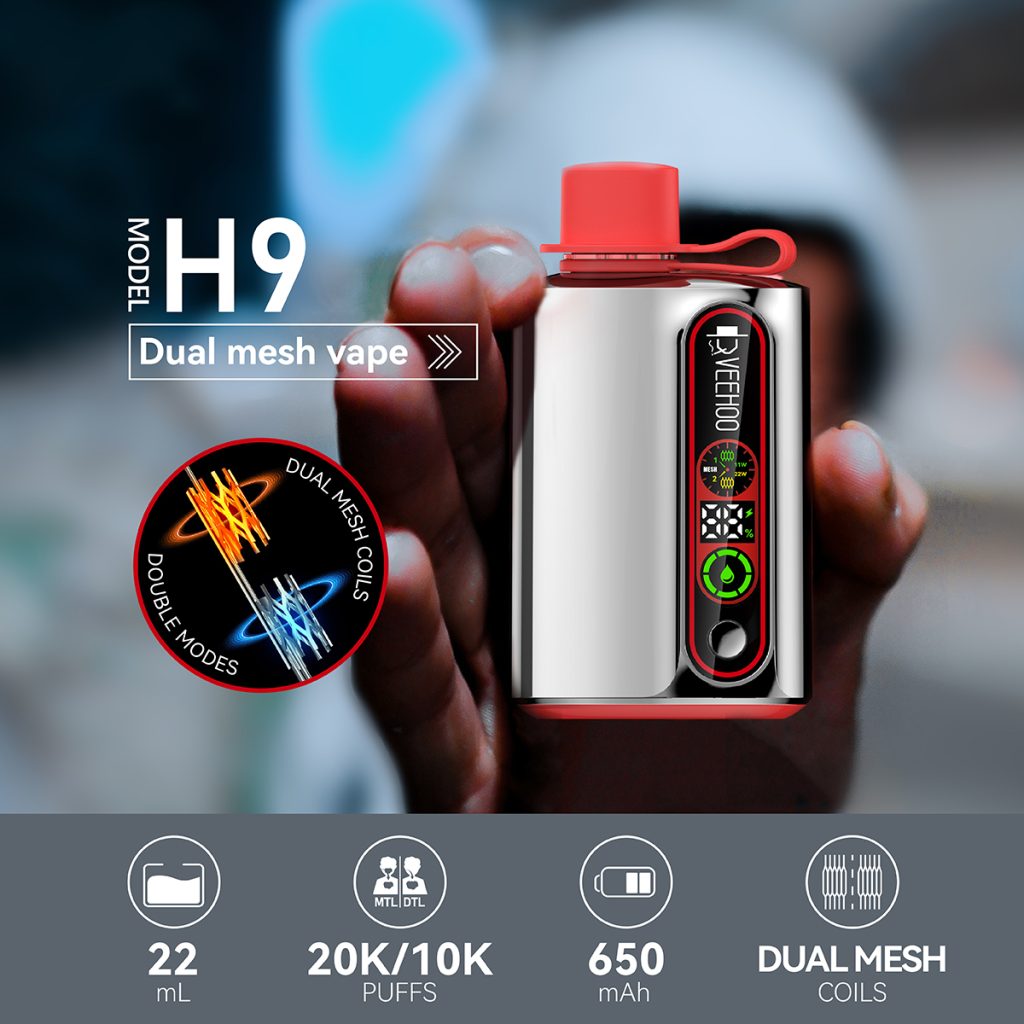
For example, VEEHOO, as an e-cigarette manufacturer, has long served international brands through OEM and ODM models. In this collaborative structure, the factory primarily acts as an “executor” and “collaborator,” providing corresponding production and technical support based on the brand’s compliance assessment of the target market.
When state-level markets like Florida impose stricter requirements on the display and promotion of e-cigarette products without FDA authorization, brands often re-evaluate their product portfolios. This scrutiny may prompt brands to focus their resources on products with clear compliance pathways, while manufacturers need to adjust their production plans accordingly.
Under the OEM model, VEEHOO typically manufactures based on designs, specifications, and compliance documents provided by clients. If a client’s market strategy changes, such as reducing the availability of a particular product type in a specific state, the factory’s order structure will also change.
Under the ODM model, factories are involved in product design earlier. In this case, understanding different market regulatory trends becomes particularly important. Whether a product needs to accommodate different packaging options, or whether more explicit compliance warnings should be included in the documentation, will be influenced by the policy environment.
It is worth noting that the Florida bill does not address medical or health effects in its text, but focuses on institutional aspects such as authorization, display, and taxation. This approach also reduces the likelihood of professional disputes arising during policy implementation.
From a legislative perspective, this strategy of “avoiding medical debates and focusing on regulatory tools” helps increase the bill’s passage rate. For regulators, clearly defining the boundaries of the rules is often more practical than discussing the product risks themselves.
For manufacturers, this means the focus of compliance has shifted from product performance itself to how the product is presented in the market. Even if a product meets technical requirements, how it is displayed and promoted at the retail level will affect market access.
From a broader perspective, these two bills in Florida reflect a more segmented and structured phase in the regulation of new tobacco products in the United States. The past discussion, primarily focused on “to ban or not to ban,” is being replaced by questions of “how to regulate” and “how to differentiate.”
E-cigarettes and heated tobacco products are increasingly being discussed within different policy frameworks. This distinction helps make regulation more targeted, but it also places higher demands on the industry’s understanding.
For manufacturing plants like VEEHOO, maintaining flexible OEM and ODM capabilities is crucial in the face of a constantly changing policy environment. Differences in rules across different markets and states mean that product solutions cannot remain static.
Florida’s legislative moves may only be local adjustments, but they reflect a shift in regulatory thinking. From “whether it exists” to “how it is presented” and “how it is priced,” policy tools are becoming more diversified.
As discussions surrounding the bill and its detailed rules become clearer, the way e-cigarettes and heated tobacco products operate in the Florida market may undergo subtle but profound changes. These changes will not only impact the retail sector but will also propagate upstream along the supply chain.
For the industry, this is not simply “good” or “bad” news, but a signal that needs careful interpretation. In the context of evolving regulations, understanding policy logic and proactively planning for compliance are becoming fundamental capabilities for competing in the market.
Tags: ceramic atomizer core, e-hookah (electronic water pipe), OEM ODM, Veehoo vape