A proposed tax reform plan in Iowa has recently attracted widespread attention from local retailers, public finance departments, and the e-cigarette industry. According to a proposal being discussed in the state legislature, Iowa plans to raise the excise tax on traditional cigarettes to $2.01 per pack, while simultaneously including e-cigarettes in the tobacco tax system for the first time with a clearly defined percentage, proposing a 15% tax on the retail price. This change not only signifies an adjustment to the tax burden structure but is also seen as a significant shift in the state’s regulatory approach to new tobacco products.
On the surface, this appears to be a typical fiscal and public policy issue. Tax increases are often used to increase revenue and constrain specific consumer behaviors. However, with e-cigarettes gradually becoming an important part of the tobacco market, the message conveyed by this proposal goes far beyond simply “raising taxes.”
For a long time, different states in the United States have held differing attitudes towards e-cigarette taxation. Some states choose to tax by milliliter or by nicotine content, while others adopt an ad valorem tax model similar to traditional tobacco. Iowa’s proposed 15% tax rate is considered a relatively neutral approach, avoiding complex technical calculations and directly linking the tax burden to product prices.
The state government explains that e-cigarettes have already captured a significant share of the consumer market. If they continue to operate entirely outside the tobacco tax system, it will not only create an imbalance in the tax structure but may also affect policy fairness. Especially against the backdrop of continuously increasing cigarette taxes, if e-cigarettes remain “low-tax or tax-free” for a long period, it could easily be seen as a tax loophole.
The increase in cigarette tax to $2.01 is also symbolic. It means that Iowa will officially join the ranks of “high cigarette tax states.” Supporters believe this will help stabilize public revenue and align with tax rates in neighboring states, thereby reducing the impact of interstate purchases. Opponents worry that excessively high tax rates may further squeeze the survival space of local retailers.
In contrast, the discussion surrounding including e-cigarettes in the 15% tax rate focuses more on “regulatory logic.” Some policymakers believe that e-cigarettes have evolved from a niche alternative product into a mature consumer category and should be subject to clearer tax and market regulation. This view is gradually gaining consensus in several states, and Iowa’s proposal reflects this trend.
It’s worth noting that the proposal does not address any health attributes of the product, nor does it offer any medical evaluation of e-cigarettes. The policy text focuses more on tax fairness, fiscal stability, and regulatory consistency. This approach is not uncommon in current tobacco-related legislation across various US states.
From a retail perspective, tax changes could directly impact pricing strategies. For price-sensitive consumers, price increases for e-cigarettes after being included in the tax system are almost inevitable. Retailers will need to find a new balance between profit margins and market competition.

Further upstream in the supply chain, the impact is also being reassessed. E-cigarettes are not a single product but a complete system consisting of devices, atomizing components, and e-liquid. Tax adjustments may prompt brands to adapt their product structures and market positioning to suit the policy environments of different states.
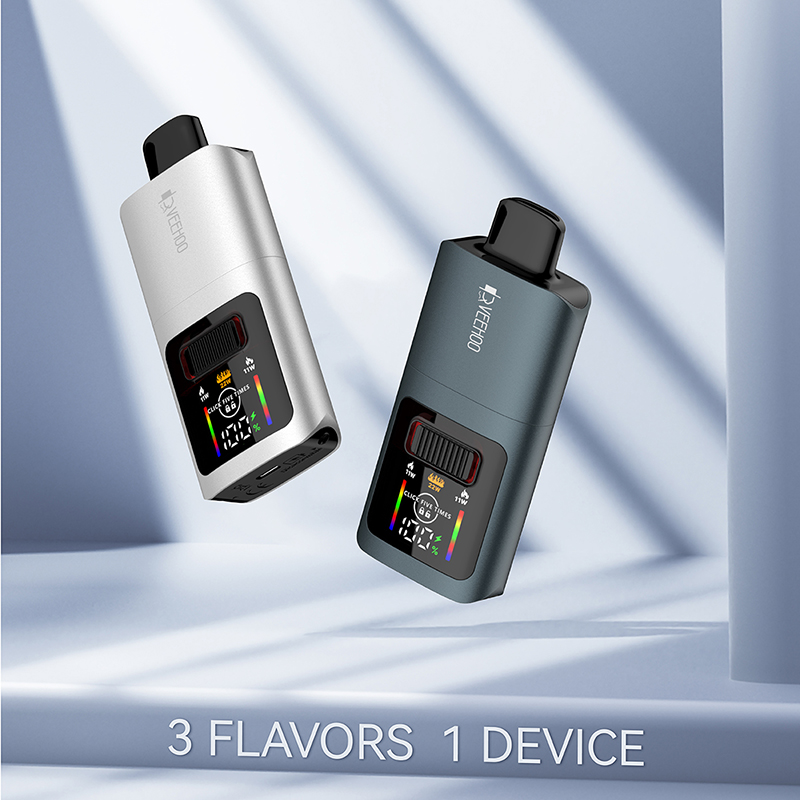
In this context, the role of the manufacturing end becomes particularly crucial. E-cigarette manufacturers, such as VEEHOO, have long provided OEM and ODM services to overseas markets, with clients spanning markets under varying regulatory environments. The differences in tax systems across US states mean that factories need to fully consider policy factors during the product planning stage.
Under the OEM model, factories typically produce according to the brand’s predetermined specifications. However, when the tax system of the target market changes, brands often impose new requirements on product configurations and pricing ranges. This necessitates that manufacturers maintain consistent quality while possessing sufficient flexible production capabilities.
In ODM collaborations, the situation is more complex. Factories not only participate in manufacturing but also provide solutions during the product design stage. Facing policy trends like those in Iowa that include e-cigarettes in the ad valorem tax system, ODM solutions may place greater emphasis on structural simplification, cost control, and clear compliance labeling to help brands better navigate the tax rules of different states.
It is worth noting that tax adjustments often lead to a market reshuffling effect. Small-scale operators with insufficient compliance capabilities may be forced out of the market under the dual pressures of rising costs and stricter regulations. Companies with mature supply chains and compliance experience, however, are likely to remain relatively stable during this adjustment.
From an industry perspective, this isn’t necessarily a bad thing. A clearer tax framework helps reduce gray areas, allowing market competition to focus on product quality, service, and compliance capabilities. For factories with a long history in manufacturing, this environment is more conducive to leveraging their scale and experience advantages.

Returning to Iowa itself, the proposal is still under discussion. Whether it will ultimately pass and whether the tax rate will be adjusted remains uncertain. However, it is certain that the state has clearly sent a signal: e-cigarettes are no longer considered an “exception” outside the tax system.
This signal echoes the policy trends of many states in the US in recent years. From retail licensing and product registration to the improvement of tax and enforcement mechanisms, e-cigarettes are being gradually incorporated into a management system similar to that of traditional tobacco. The difference lies in the different paths and paces chosen by each state.
For businesses, the real challenge isn’t a specific tax rate, but rather maintaining stable operations in a volatile policy environment. Continuously monitoring local legislation and conducting compliance assessments in advance have become routine tasks across the entire industry chain.
In this context, factories like VEEHOO, whose core businesses are OEM and ODM, value not only in their production capacity and processes but also in their understanding and ability to respond to different market regulations. As the policy environment evolves, stability, compliance, and flexibility are becoming the most important competitive advantages for manufacturers.
Iowa’s proposed tax reform may be just one example among many state-level legislations, but the trend it reflects has broader implications. E-cigarettes are transitioning from a “new thing” to a “regulated, normalized product,” and taxation is an indispensable part of this transformation.
Tags: ceramic atomizer core, e-hookah (electronic water pipe), OEM ODM, veehoo vape.